
 Our Thinking
Mima Moments, Natasha Davies, Principal Accessibility & Inclusive Design Consultant
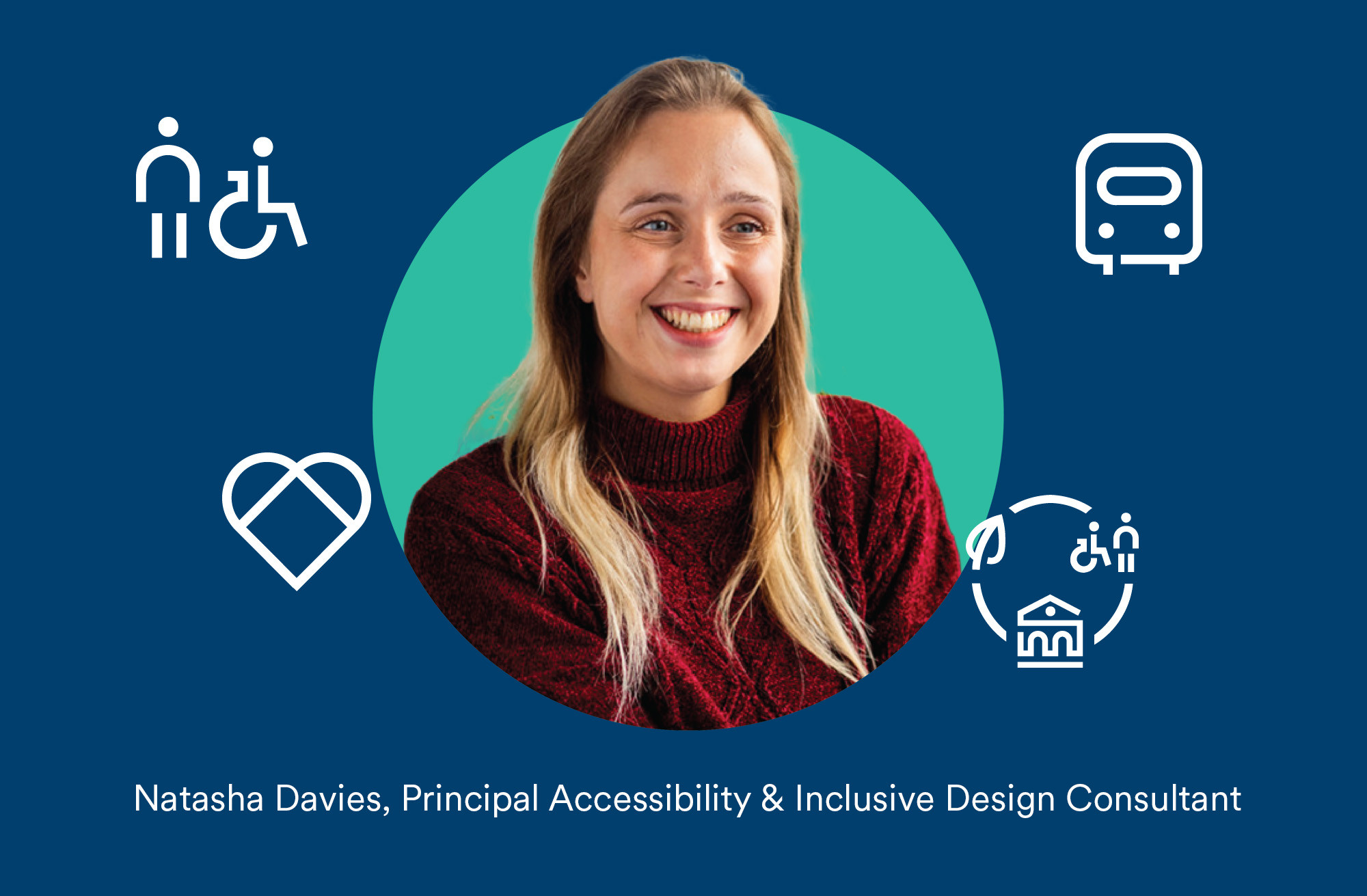
We spoke with Natasha Davies, Principal Accessibility and Inclusive Design Consultant at Mima. Natasha shares her perspective on inclusive design being a tool that we can use to create a more equitable society, and discusses where organisations can begin - starting with conversations, and an honest look at who has been excluded from a space.
What inspired you to pursue a career in design?
I completed a Masters degree in town planning and really enjoyed the urban design parts of it. After University I started a career as a town planner and whilst working as a planner I signed up for an access and inclusive design course, and discovered that it was something I could specialise in, and make a career out of.
I also have lived experience of disability, I’m a wheelchair user, so I have first hand experiences of some of the barriers that exist in society. I started learning more about inclusive design and the social model of disability and it shifted my own perspective on how I thought about accessibility. It made me think more about how we can design the built environment, services and products to be more inclusive, rather than people having to adapt to an environment that isn’t designed for them.
What does inclusive design mean to you?
For me it's about enabling people to simply participate and enjoy day to day activities without having to think too much about accessibility, because it's embedded into the design from the outset. Using spaces should be easy for everyone. I see inclusive design as a tool that we can use to create a more equitable society. It's not just about designing for disabled people, it’s about designing for as many people as possible and at the same time celebrating diversity.
I see inclusive design as a tool that we can use to create a more equitable society. It's not just about designing for disabled people, it’s about designing for as many people as possible and at the same time celebrating diversity.
What's a small change every designer could make today to be more inclusive?
Whether it's a big or small change, change often starts with a conversation with others that sparks an idea. That could be within people's teams, with an expert, or with someone with lived experience. Having those conversations is a great way to start, but then this needs to translate into action. Inclusive design can be a really broad topic and it can be quite overwhelming when organisations try to get everything right all at once.
I encourage organisations to start by looking at who has been excluded from a space, product or service, and then engaging with them to really understand the problem or challenge.
What's an example of inclusive design in the world that most inspires you, and why?
I enjoy spending time outdoors and working in this space, and I’m inspired by the work organisations are doing to improve access to nature. This involves not only improvements to the physical environment, but also collaboration between organisations to enable people to participate in activities and events.
I’m inspired by a lot of smaller organisations that don’t have a lot of resources but are still committing to being more inclusive. One example is a cycle centre near me that provides a range of adapted cycles and accessible trails, enabling disabled people to enjoy the local area either independently or as part of a group activity.
I encourage organisations to start by looking at who has been excluded from a space, product or service, and then engaging with them to really understand the problem or challenge.
What does the micro and macro mean to you?
For me, the micro is about the individual moments and interactions we have in a space.
The macro is all those individual moments that come together to create that wider experience. For example, a theatre experience. The micro might be booking a ticket, interacting with a member of staff, finding a seat, watching a show. The macro is when all of those things come together to create the overall experience.
In the work we do at Mima, it's important to think about all those individual touch points, and how accessible they are. But we also need to think about how they connect to create that overall journey.
If one part of the journey isn't accessible, for example the booking process for an event, this can have a knock on effect throughout the rest of the journey. The details are important, but it's just as important to step back and look at the overall journey. That broader perspective is essential.
Written by:
Natasha Davies
Principal Accessibility and Inclusive Design Consultant
Natasha is an NRAC accredited Access Consultant. She has worked on a broad range of accessibility projects for organisations based in the UK and internationally, helping clients to implement inclusive design solutions. Her previous project experience includes working with historic buildings, art galleries, office spaces, sports centres and mixed-use development schemes.

